
My ACL surgery was June 24, 2015, so today I am officially four years post! If I’m being honest, when I first had my surgery I didn’t expect that after four years I would still be talking about it. I knew recovery was going to be lengthy – the Glen Sather Sports Medicine Clinic (who managed the initial stages of my rehab) don’t recommend return-to-sport (RTS) until 9+ months but my knee has been a consideration in my training and a factor in the activities I do this entire time.
For the last couple of years, I’ve given a bit of a rundown of things I’ve accomplished and things that I’ve learned:


- Three years post – last year was a big turning point. I hit two big lifting milestones (300# squat and 400# deadlift) and had a full year without significant setbacks. This was the year I feel like I finally turned a recovery corner.
- Two years post – year two was difficult. I had my most successful meet ever and wanted to follow it up by qualifying for Nationals. Instead I got injured…while doing mobility work on my knee. What I had hoped would be a minor setback wound up being a fairly lengthy one (6ish months) and it took even longer for me to not fear my knee giving out both in the bottom of squats and at extension (the top of squats and deadlifts).
- One year post – a younger, yet still relatively cynical Darron did not specifically make a run-down of what happened in Y1, but I remember it being frustrating and difficult. Having had knee surgery six months after ankle surgery meant that I didn’t really have a “good” leg. I did, however, hit some significant goals – at 4.5 months, I was (finally) cleared to run. At 5 months, I was cleared to skate (and did so on the same rink at which I had broken my ankle). At 11 months post, I competed in my first 3-lift powerlifting meet (and had my first drug test!). And the day after my one year anniversary, I stepped back onto the football field and closed that chapter of my life.
This year, however, I want to focus less on my personal milestones, and more on what this process has taught me that I would want someone recovering to know. Here are four thoughts for four years.
1. Be Your Biggest Advocate
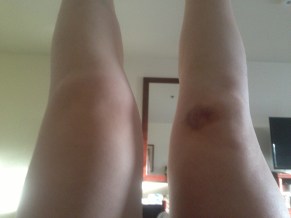
My ACL was torn for four years before I was properly diagnosed. In that time, six different physiotherapists and two physicians assessed me, told me that I was fine, and cleared me to return to sport. Even though my knee would swell, give out, and otherwise not do the things a knee should do, I trusted the feedback I was given by those professionals and continued to play hockey, football, CrossFit and strongman. I have incredible memories from all of those, but the reality is that doing them on an unstable knee left my knee in a state my surgeon described as “ground hamburger”. Not great.
Ask questions. Admittedly, I asked the question “is it my ACL?” more than once. And I was told that it wasn’t more than once. I asked the question “ok, but why does this keep happening” multiple times. I went wrong in accepting “I don’t know” as the answer.
I don’t know is not an answer you can or should accept from a medical professional. Be your biggest advocate and push for the answers. If the one you are with does not know, ask for a referral to someone who might. Be the squeaky wheel. Do not feel like you are inconveniencing someone by putting your health and well-being first.
If a problem continues, and you still do not have answers, ask if imaging is appropriate. An MRI confirmed my injuries. I went from waiting four years of “you’re fine” waiting to be diagnosed to being marked urgent for surgery because my knee was decidedly not fine. X-ray, ultrasound, MRI – they can all be appropriate in different situations. It’s more than okay to ask if they are appropriate in yours.
2. Be There For Others
This process is long, difficult and often times excessively frustrating. Sometimes it’s really nice to hear that everything is going to be okay. Hearing it from someone who has been there? Definite bonus.
I remember after surgery, when I was struggling to find a comfortable way to sleep. My knee felt best in slight flexion, which is something of a challenge to maintain naturally. My biggest successes were coming from sleeping in a recliner, but not surprisingly, I really wanted to sleep in a bed instead. A friend and ACLr alumni came over to my house and showed me how best to stack pillows to elevate and stabilize my knee and let me both sleep in a bed and on my side. Four years later and Nancy, you’re still a gem in my eyes!
If you’ve had ACL surgery, you’re part of a club. None of us really wanted to be in this club, but here we all are. If someone is doing awesome with their rehab, tell them. Cheer them on. Celebrate their victories. If you’re a little bit salty because their rehab seems easier or faster than yours, that’s fair, but try to swallow that negativity on down. When it comes to ACL surgery, “easy” is still pretty damn hard.
3. You Will Stumble, But You Can Choose to Get Back Up
I remember the first time I thought that I tore my graft. I turned around in my car. Yes, that’s it. I was reaching for something – I don’t even remember what now – and that motion gave me a sharp pain in my knee. I grabbed it, my heart sunk, and I probably cried. This was not a one-off occurrence. Here are some other times I was convinced I tore my graft:
- When I was working on flexion while sitting on the ground in my office and something tensed up in my knee;
- When I was flipping burgers and had to turn around to put them in a warmer;
- When I fell off my mountain bike and rolled down a ravine
In all three cases, my graft was fine. On the flip side, I’ve had my knee give out while squatting. My biggest setback came from stretching. You can do everything right and have something go wrong. Honestly, I’d argue that you should probably prepare yourself for something to go wrong at some point.
When the time comes, you’ll probably be scared to return to play. At some point in the process, you’re pretty likely to experience some kind of setback. Maybe you’ll reinjure yourself. Setbacks suck, but they are not the end of your journey. The choice is always yours to dust yourself off and try again.
Fall down nine times. Stand up 10.
4. The Recovery Timeline That Matters is Yours
If you’re anything like me, you’ll spend a lot of time on Google looking at other people’s recovery, or different charts outlining what recovery “should” look like. These are guides, not doctrine.
Your first three months are about range of motion, building strength, and not blowing up with swelling. You’ll probably start to feel kind of ok after 4-6 weeks, which actually becomes super confusing because the graft is actually at its weakest between 4-12 weeks (so no, your physio is not holding you back for no reason). Once you hit that magical three months though, all bets are off.
Some people will need more time to rebuild strength. Some will progress into an agility and plyometric phase and nail it right away. I…did not. Jumping was really, really hard for me, and I needed a lot of work at this on both of my legs. My knee rehab would aggravate my ankle. My ankle rehab would aggravate my knee. I felt like a failure. If you are putting full effort into your recovery efforts, you are not a failure if it takes longer than expected. You may feel like a failure (I certainly did), but that doesn’t make it true. It is exceptionally frustrating when things you could previously do are suddenly exceptionally difficult. I couldn’t squat to depth for months. At seven months I was still trying to nail two-legged jumping (and had to cut back on exposure to it because my ankle still couldn’t tolerate it).
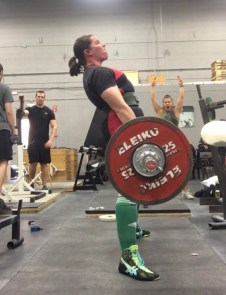
There were 1,091 days in between my squat PRs. I’ve had the same squat goal for the last three years. At meets, I’m typically one of the first ones out to squat and my ego HATES IT. But you know what? Every day people quit because things aren’t easy. Recovery is a long road. The time investment is high. It’s natural to get frustrated, but refusing to quit will pay off and it will set you apart.
The journey is yours. Comparison is the thief of joy.
I haven’t quit. I won’t quit. I am going to fight for every kilo. And when I finally succeed, I am going to celebrate the hell out of it. You should too. You earned it.

 Two White Lights
This is so inspiring, Darron. Well done and thank you for sharing your story!
LikeLike
Keep fighting Darron, the worst is hopefully behind you and you’ll find your knee stronger and be more confident pushing with each year!
LikeLike
LOVE that we are writing on the same topic! Love that you put this quote in “you are not a failure if it takes longer than expected.” So inspiring!
LikeLike