
As I’ve befriended more lifters and had the opportunity to talk about all things gym, I’ve really learned that it’s not just me that has struggled with discussions with my coach, particularly and especially when things are not going according to plan. Through those conversations and a lot of reflection on my own personal anxiety adventures, I’ve identified four common scenarios that a lot of athletes encounter when it comes to talking to their coaches (or things that they are too worried to actually approach with their coaches).
To lend some credibility to my recommendations when it comes to working through these scenarios, I reached out to my own coach, Ryan Stinn, and asked for his feedback on each one and how he might approach handling them with an athlete.
As a short background, Ryan has been coaching me since July 2016. I had started dabbling in powerlifting in late 2015 and did my first three-lift meet in April 2016 using some loose programming from a friend. I was a bit disappointed with how that meet went for me, and a friend recommended Ryan to me. Like most nerds would, I took to Google in order to find out more. Ryan actually had several free program templates on his website, so my first foray into the Stinn System was with one of those. I remember being very impressed that not only that there was a “try before you buy” option, but just how responsive he was when I reached out with questions on how to interpret his programming. After finishing that six-week free template, I was ready to give customized programming a try. He’s been stuck with me ever since.
I’ve experienced some pretty fantastic moments of success while training with Ryan. I’ve also experienced my fair share of disappointment and struggled through the frustration of both aches and pains and injuries. I’ve learned a lot about lifting. But honestly, what I value the most is what I’ve learned about myself and about navigating these ups and downs within a coach/athlete relationship.
Scenario #1 – My life is really stressful right now and I don’t actually have time to do everything in my program/it is affecting my ability to lift
This one has come up for me many times. My previous job was largely event-based, and I would move between stretches of downtime into long stretches of out-of-town travel, overtime, and 12-15 hours per day on-site at events. We’ve also navigated significant life events (break ups and deaths, both pet and family) and the entire process that has been me immigrating to the US.
This is an area in which I really struggled to communicate my own needs. I’ve done stretches of 7-12 days in a row in the gym in order to try and maintain a five-day per week program out of a false belief that if I didn’t I would disappoint Ryan (because in my mind, we were tied to five days per week).
Ryan says:
It would be a matter of determining the time frame that this new stressor is going to last. Will this be a two week thing or did you just enroll in college and life sucks now for the next 4 years? If it’s a week or two then we can look at what the priority movements are and make sure those get done if at all possible. If it’s longer then let’s reassess how many times a week you can train and what the duration of those workouts will be.
A good coach is committed to working with you within the framework of the constraints of your own personal situation. I have learned this the hard way, and had I communicated my own needs and life stresses more effectively (and in many cases, more proactively), I could have saved myself a lot of stress – not to mention 12-day stretches burnt out in the gym.
I now try to be far more honest and upfront with Ryan about how my life outside the gym is affecting or may potentially affect my life in it, and I try to do so proactively when possible. Prior to my last competition cycle at work (which also coincided with the final preparations for my international move) I asked to stop lifting heavy, because I did not have the ability to adequately prepare myself mentally and physically to do so.
Scenario #2 – Whenever I do (this movement), it causes me pain.
Ryan says:
STOP! If something hurts then I don’t really care who told you to do it just stop doing it. We can assess the goal of the movement and determine if we can A) modify the movement to be pain free or B) sub in a movement that doesn’t hurt. Lets also work towards figuring out why it’s causing you pain and hopefully resolve some issues.
I’ve felt many different irrational feelings when it comes to movements that cause me discomfort or pain while I’m doing them. I’ve been afraid that needing them changed or modified will mean that I’m too needy as a client; I’ve also worried that the movement in question must be the key to my gains and if I don’t do it, I will ruin them. In accordance with these fears, I spent six weeks leading up to 2018 Nationals doing lunges on what I was kind of worried was a broken toe (it turned out it wasn’t, but I did need to do some physio and work on my big toe mobility). I didn’t tell Ryan about it until we were at Nationals and it wound up being a big discussion point in my post-meet breakdown.
Since that conversation, I’ve worked really hard at giving Ryan the information he needs to program movements and do so in ways that will ensure I’m pain free. Just recently, pull ups and chin ups were removed from my program because they were giving me significant elbow pain. They were replaced with inverted rows. My pulling/back strength still progressed and improved, but I didn’t have to be in pain to make it happen.
Scenario #3 – I don’t think I’m doing (this movement) or using (this piece of equipment) that’s in my program correctly.
This is one that I’ve learned a lot of people experience some anxiety over. I’ve had friends come to me with their new programs, asking about movement X or Y, and what the heck it looks like. In some situations, the “phone a friend” option works well, but in others you’re going to be far better served going to the source. There are a million different exercises and variations out there; no good coach is going to expect you to know them all.
Ryan says:
Send video and I’ll do my best to assess and offer suggestions. That said getting the right cue for the right person for the right movement is sometimes not easy. Check YouTube; there are going to be about million videos that talk about that movement probably and maybe one of those coaches have the right cue or explanation for you. Long story short though if you aren’t doing Bulgarian split squats textbook perfect but you are still getting sore quads/glutes/soul then you are getting the training effect we are after.
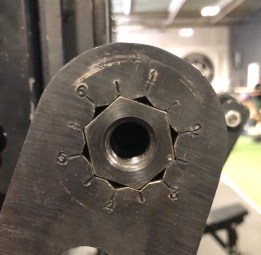 Since I stopped worrying irrationally about being judged for what I didn’t know, I’ve been able to quickly clear up any questions I’ve had about movements. In fact, this extends beyond movements and into equipment, too. A couple months ago, I used a Kabuki Strength Transformer Bar for the first time. I had figured out where to switch the settings on the bar, but was stumped as to how to know exactly which number the bar was set to. I messaged Ryan, sent him a picture of where I was on the bar, and quite quickly got a response of “do you see the little dot?” (I hadn’t). Problem solved. Workout resumed.
Your coach does not think less of you for asking questions; make your life easier and ask away.
Scenario #4 – I haven’t PRed in (time range) and feel like I am a failure.
Whew; the feels are real with this one. When I first started with Ryan, I experienced some pretty great “beginner gains” and increased my total by 43.5kg between my first two meets (April and November 2016). Since then, my best total of 405 (+16.5kg) came in November 2017, and I’ve even gotten to experience the mess of feels that come when you compete and your total is less than it was previously (Nationals in February 2018, with a total of 397.5). I’ve struggled with injuries, mental performance, work stress and life stress and through it all have spent an awful lot of time in the gym with very little added to my max lifts to show for it.
There’s a lot of anxieties that can accompany stalled progress. For me, I worried that Ryan would think I wasn’t following the program, or that I was somehow just “doing it wrong”. I’ve had irrational feelings of being an athlete that doesn’t “deserve” a coach, because I can’t even make progress.
Ryan says:
This one is tough; everyone wants to see the fruits of their labours and when stuff just isn’t producing it’s hard to reconcile with the reason why you are putting in the work. There can be a lot of reasons why a lift isn’t moving in the right direction, whether it’s injury, technical, or mental, assessing these reasons and trying to get it moving again can take some time. Stepping back the weights to work on technique and weaknesses is generally going to pay off in the long run but it takes time to do that work, then to retest to find out if it did what it was supposed to do. Sometimes what you really need is a big sweeping change to just help refresh things. If you’ve been doing the same program for a while then something totally different might spur new growth.
This is an area of my training that I continue to struggle with, but I now make a conscious effort to talk about it. I wish I could say that doing so fixed everything, but it has helped me not only with setting more realistic goals, but with knowing when it’s time to push and when it’s time to take a step back.
Athletes have feelings, emotions, ups and downs. Sometimes life gets stressful. Sometimes you’re not going to know how to do a movement, or worry that you’re not doing it as well as you could be. If there’s one piece of advice that I can give to any athlete, it’s to check in with your coaches. Talk to them. Keep them up to date on what’s going on and how it’s affecting your training – for better or for worse. Like anything in life, opening those lines of communication (and keeping them open) takes practice. I still have a moment of trepidation when I send Ryan a feels-filled email, but I have to say – each time I’ve done it, I get something helpful back from him.
Good coaches get into coaching because they want to work with athletes, not all-knowing robots. Let your coaches help you. Don’t be afraid to reach out.

 Two White Lights