In Part One, we got to know all the common straight barbells you are likely to find in your friendly neighbourhood powerlifting gym. Today, we are going to go through the six most common specialty bars, how to pick them out, and what you might see them used for.
1. Safety Squat Bar
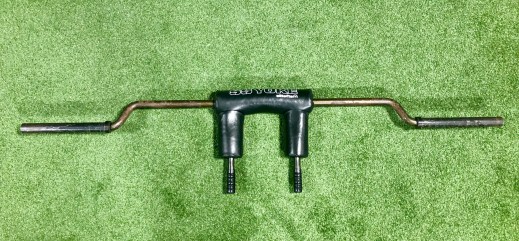
This is probably the most well known and used specialty bar. The safety squat bar (SSB) is very easy to pick out; it will have a U-shaped pad in the middle, with handles in the front, and the loadable sleeve will be slightly cambered. Most SSBs are heavier than a standard straight barbell (the EliteFTS SS Yoke Bar is 65 pounds; the Rogue Safety Squat Bar is 70). The SSB gets programmed for a variety of reasons – sometimes its to take pressure off of the shoulders or elbows if they’ve gotten too beat up from a traditional back squat. Sometimes it’s to target weak points in the squat. Sometimes it’s not even to squat – the SSB is great for accessory movements like good mornings and lunges.
Defining Characteristics:
- U-shaped pad (yoke) in the middle of the bar + handles
- Slight camber
Dos/Don’ts:
- Do: Whatever you’re programmed to do with it
- Don’t: Throw it on the ground roughly and break the plastic covering on the handles.
2. Cambered Bar
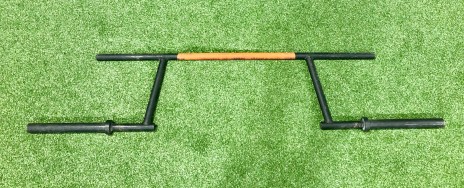
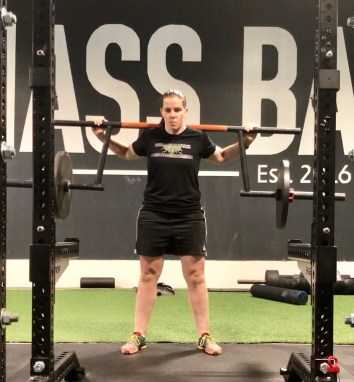
Cambered bars have a thick top bar with drop downs to the loadable sleeves (there is typically some additional overhang on the top bar after the drop downs to allow for a variety of hand placements). Similar to an SSB, cambered bars tend to weigh in heavier than a normal straight bar (Elite FTS makes a 65 pound bar; Rogue an 85 pound bar). This bar is most commonly used for squatting, but you may also see it used for benching, or for zercher movements (like lunges).
Defining Characteristics:
- Looks like a thick straight bar with drop downs to loadable sleeves
- Commonly has tape across the top bar to increase grip for squats
Dos/Don’ts:
- Do: Whatever you’ve been programmed
- Don’t: Honestly, I would argue this is one of the most bomb proof bars with very little on it that breakable. You still shouldn’t do dumb things with it, but at least it’s hard to damage this one.
3. Multi Grip/Football/Swiss Bar
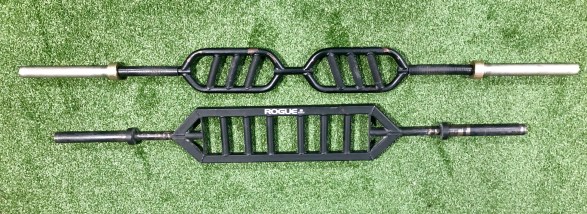
This bar style goes by many different names, but they all look similar (which is why I’ve grouped them together). This bar looks like the middle of a standard barbell was replaced with a rectangle full of various handles. These handles can be straight up and down (which will give you a neutral grip); or angled. The goal with these neutral/angled handles is to reduce stress on the shoulders and/or elbows during upper body movements like benching, pressing and rowing.
Defining Characteristics:
- The middle of the bar is full of handles
Dos/Don’ts:
- Do: Upper body movements
- Don’t: I really wouldn’t recommend squatting with it
4. Bandbell Bar
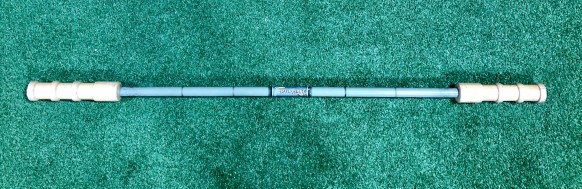
These are popping up in gyms more and more. Essentially, it’s a super light bar (roughly six pounds) that you load with kettlebells and/or weight plates suspended from bands. These bars can accommodate 300+ pounds of weight. Once loaded and unracked, these bars are super shaky, requiring the athlete to increasingly activate their stabilizing muscles.
Defining Characteristics:
- Super light; looks kind of like a plastic barbell
Dos/Don’ts:
- Do: Learn how to properly load it before you try to so you don’t flip the bar off the rack
- Don’t: This is one of those bars that makes it far too easy to do something dumb. Work up slowly. Free squats (so not to a box) are not recommended because of the overall instability of the bar.
5. Trap Bar
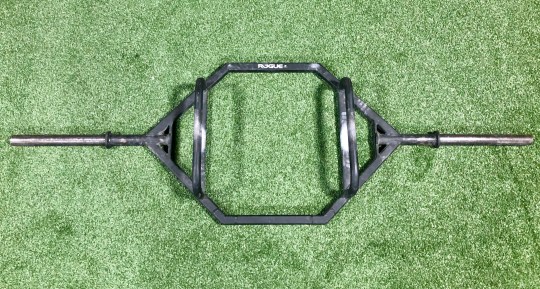
This bar has a hexagonal (depending on the bar it may look more or less like a hexagon) middle that you can stand in. The trap bar allows you to do deadlifts from a neutral grip and a higher start position, reducing the stress and strain on the lumbar spine. Because this variation is easier off the floor, it can typically be loaded with more weight than a traditional deadlift. You may also see it used for movements like carries, or plyometric jumps.
Defining Characteristics:
- Big hexagonal space in the middle that you can stand in
- May have elevated handles on one side and lower handles on the other (so you can alter the starting position off the floor)
Dos/Don’ts:
- Do: Feel like a badasss when you can lift 80% of your deadlift 1RM for sets of 15
- Don’t: This is another one of those relatively bomb proof bars. Load up and enjoy.
6. Curl Bar
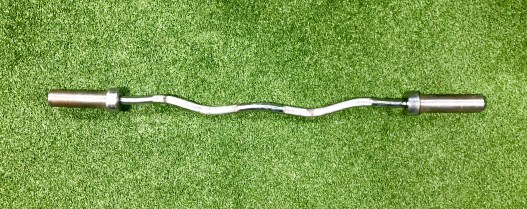
This bar’s name pulls double duty in that the bar itself is kind of curly, and its number one use is for bicep curls. You can perform a ton of different bicep and tricep exercises with this bar.
Defining Characteristics:
- Shorter than a standard barbell with a bendy middle
- Highly likely that no one knows what this bar actually weighs
Dos/Don’ts:
- Do: Get massive biceps
- Don’t: Try to squat with it. That would be weird
All in all, we’ve outlined 13 different bars. All that’s left now is to go forth and use them! Any questions? Drop them down below.

 Two White Lights
One thought on “Getting to Know Your Barbells, Pt. 2 – The Special Ones”